Brass, Copper or Stainless? A Designer's Guide to Metal Finishes and Textures
By Kaden Stuart · · 6 min read
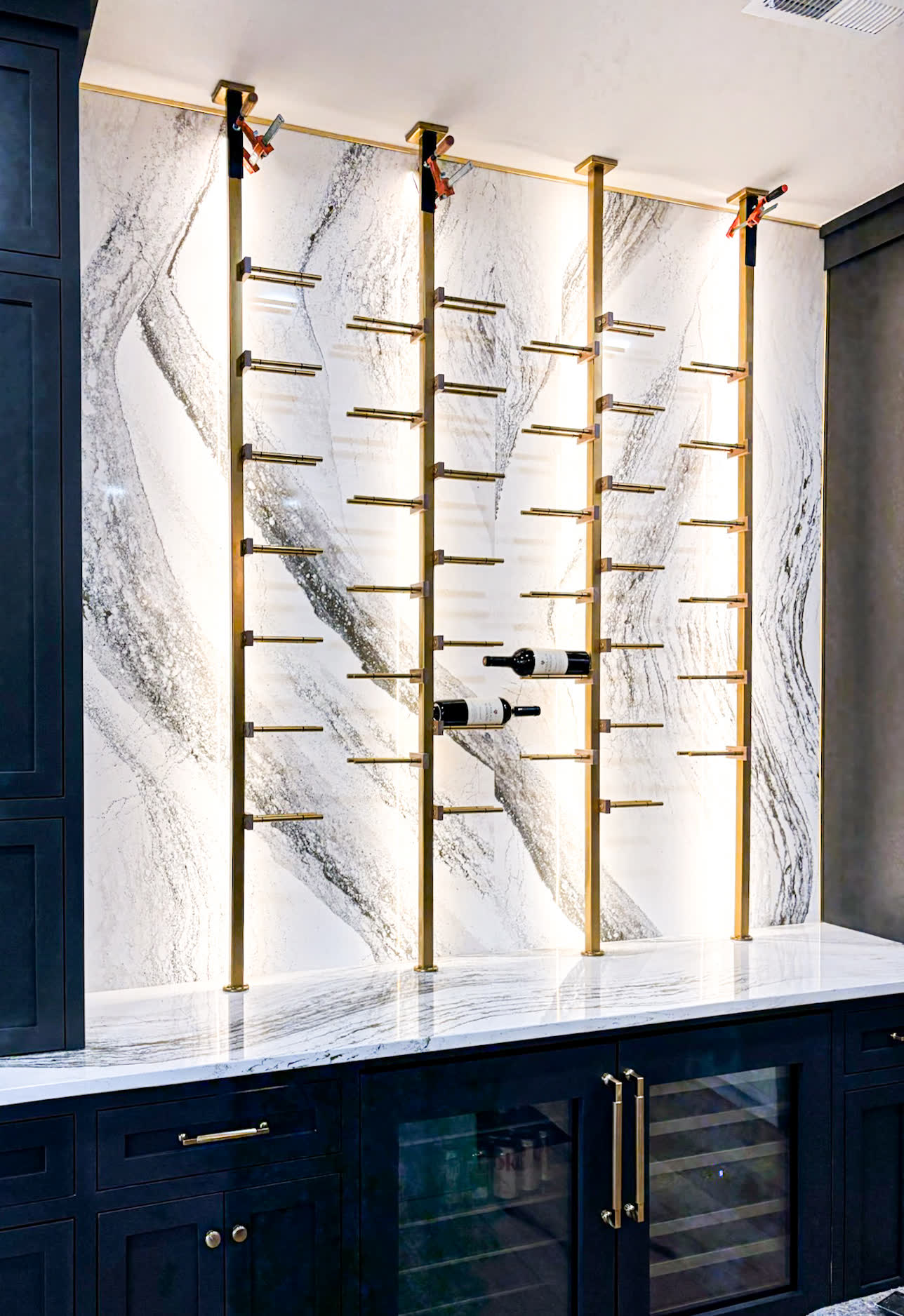
The short answer
Choose brass for warmth and a finish that can age into a soft patina, copper for a rich color that darkens and can be patinated, and stainless steel for a cool, durable, low-maintenance surface. Each metal is available in many finishes, from mirror polish to brushed, hairline, bead-blasted and patterned textures. Because these metals show every scratch, heat mark and seam, the quality of a finished piece depends heavily on the skill of the fabricator who builds it.
Brass, copper and stainless steel are some of the most rewarding materials you can put in a home. They are also the least forgiving. This guide walks through what each metal looks like over time, the finishes and textures you can choose from, and what separates a fine piece from an ordinary one.
How do brass, copper and stainless steel compare?
| Brass | Copper | Stainless steel | |
|---|---|---|---|
| Color | Warm gold to yellow, depending on alloy | Pink-orange when new | Cool silver-gray |
| How it ages | Darkens and softens unless lacquered | Darkens to brown indoors; can turn green outdoors | Stays largely the same |
| Feel | Warm, traditional or modern-luxury | Rustic, artisan or dramatic | Clean, modern, technical |
| Maintenance | Polish, or let it patina | Polish, seal, or let it patina | Wipe clean; avoid steel wool |
| Best uses | Handrails, hardware, trim, shelving, inlays | Range hoods, sinks, bar tops, accent panels | Kitchens, wet areas, exterior trim, modern railings |
| Difficulty to fabricate | High | High | High for polished finishes |
None of these is "better" than the others. The choice depends on the color palette, how much the owner wants the piece to change over time, and how much it will be touched.
What should you know about brass?
"Brass" is a family of copper-zinc alloys, not a single material. More copper means a redder, warmer tone. More zinc means a paler, more yellow gold. Architectural brass and bronze products are made in several alloys, so two pieces labeled "brass" from different sources can sit side by side and not match. Specify the alloy and finish for every piece in a room, or have them all built from one source.
The biggest decision is lacquered or unlacquered:
- Lacquered brass keeps its bright, even color for years. Once the clear coat wears through at high-touch spots, it is hard to touch up invisibly.
- Unlacquered (living) brass is left bare. It darkens, warms and shows the marks of use. Many designers choose it on purpose because it looks collected rather than new, and it can always be polished back to bright.
Brass also comes in many surface finishes: polished, satin or brushed, antiqued, and darkened with chemical patinas. Ask to see a sample in the actual finish before you commit.
What should you know about copper?
Copper starts bright and pinkish and changes faster than brass. Indoors it typically darkens to a deep brown. Outdoors, or with a chemical patina, it can develop the familiar blue-green verdigris.
Copper is soft, which makes it beautiful to form, hammer and shape. It also dents and scratches more easily than brass or stainless. Hammered textures are popular partly because they hide everyday wear.
If you want copper to stay one color, it has to be sealed, and the seal needs maintenance. If you want it to change, decide whether you want a natural patina or a controlled chemical one.
What should you know about stainless steel?
Stainless steel is the workhorse of modern interiors. It doesn't patina, it's hygienic, and it stands up to heat and water. Two grades cover almost all residential work:
- Type 304: the standard for interiors, kitchens and most hardware.
- Type 316: adds molybdenum for better resistance to chlorides. Use it near pools, salt air or road salt.
Stainless is also available in a much wider range of factory finishes than most people realize, which is where it gets interesting for designers.
What finishes and textures are available?
Finish changes the character of a metal as much as the metal itself. Common options include:
- Mirror (#8): a reflective, polished surface. Stunning, but it shows every fingerprint, ripple and seam.
- Satin or brushed (#4): a fine directional grain. Forgiving, and the most common finish for appliances and hardware.
- Hairline (#6): a longer, finer grain than #4 for a more refined, linear look.
- Bead blast: a soft, even matte surface with no grain direction.
- Patterned and textured sheet: pressed or rolled patterns such as linen, honeycomb, quilted, ripple and swirl finishes. They add depth and help hide wear on panels, elevator interiors and accent walls.
- PVD and colored stainless: a thin, hard color layer applied to stainless, available in gold, bronze, black and other tones, giving a brass or bronze look with stainless durability.
- Patina and darkened finishes: chemical treatments on brass and copper that create aged, bronzed or blackened tones.
Directional finishes have a grain. On a well-made piece, the grain runs in the same direction across every joint and every panel. That one detail is often what separates a piece that looks custom from one that looks assembled.
Why do fine brass, copper and stainless pieces take a craftsman?
Steel is forgiving. Paint or powder coat covers grinding marks and small imperfections. Brass, copper and polished stainless have nowhere to hide. The surface is the finish, so every step of fabrication shows.
Here is what makes these metals demanding:
- Heat. Copper pulls heat away from a joint so fast that it fights the welder. Brass contains zinc, which boils off at welding temperatures and can ruin the joint and its color. Joints in fine brass and copper are often brazed or silver-soldered rather than welded the way steel is.
- Color matching at the joint. A filler metal that doesn't match the base metal leaves a visible line. Getting a seam to disappear takes the right filler, careful heat control and patient hand finishing.
- Contamination. Stainless can rust if it picks up particles of carbon steel from shared grinders, wheels, brushes or work surfaces. Fine stainless work needs separate tools and clean handling.
- Heat tint. Welding stainless leaves a rainbow tint. It has to be removed and the surface passivated, or the metal near the weld loses some of its corrosion resistance.
- Grain and polish. Re-creating a brushed grain or a mirror polish after welding, so the repair blends into the factory finish, is hand work that takes years to learn.
- Protection. Sheets arrive with a protective film. A careful shop keeps that film on as long as possible and handles finished parts with gloves, because a fingerprint left on bare brass becomes a permanent mark.
When you're choosing a fabricator for a brass handrail, a copper hood or a mirror-polished stainless panel, ask to see finished pieces in the same metal and finish. Look closely at the corners and seams. That's where skill shows.
How should homeowners and designers plan a custom metal piece?
- Pick the metal and finish together. "Brass" alone isn't a specification. Say "unlacquered brass, satin finish" or "304 stainless, #4 brushed."
- Decide how it should age. Living finish, sealed, or coated. Tell the client what to expect in a year.
- Order samples. View them in the room's actual light, next to the stone, wood and paint they'll sit beside.
- Match everything in the room. Have related pieces built from the same material source so alloys and finishes match.
- Plan seams and grain direction. Ask where joints will fall and which way the grain will run.
- Talk about care. Give the homeowner simple instructions: what to clean with, and what never to use.
Next step
If you're designing a space with brass, copper or stainless steel, send us drawings, inspiration photos or a rough sketch. We'll talk through the metal, the finish and how the piece will be built before anything is priced. Read our material sourcing guide to see where we buy specialty metals.
Ready when you are.
Talk through a custom metal pieceFrequently Asked Questions
+What is the difference between lacquered and unlacquered brass?
Lacquered brass has a clear protective coat, so it holds its original color for years but can't be easily refinished once the coating wears. Unlacquered brass is left bare, so it darkens and develops a warm patina with use. Many designers choose unlacquered brass on purpose because it looks better as it ages.
+Will copper turn green inside a house?
Indoors, copper usually darkens to brown rather than turning green. The blue-green verdigris most people picture forms over time with outdoor exposure to moisture and air, or it can be created on purpose with a chemical patina and then sealed.
+Is 304 or 316 stainless steel better for a home?
Type 304 is the standard choice for most interior work. Type 316 contains molybdenum, which gives it better resistance to chlorides, so it is the safer pick near pools, on coastal projects or anywhere salt and de-icers are a concern.
+Can stainless steel rust?
Stainless resists corrosion, but it can show rust spots if it is contaminated with carbon steel particles during fabrication, or if heat tint from welding isn't cleaned and passivated. Careful shop handling and proper finishing prevent it.
+Can brass and copper be welded like steel?
Not in the same way. Brass contains zinc, which boils off at welding temperatures, and copper pulls heat away from the joint very quickly. Fine brass and copper work is usually joined with brazing, silver soldering or carefully controlled TIG techniques, then blended so the joint disappears.
Services for this project
Not ready for a quote yet?
Get new guides, design ideas and recent project photos by email. A few times a year, no spam.